The “Economics of Ocean Freight” for
Double-Wing Expandable Containers—Space Magic Inside a 40HQ Container
For overseas buyers, the core competitive advantage of double-wing expandable units is often reflected on the bill of lading. Compared to prefabricated houses with fixed widths, the essence of the double-wing design lies in its “compliance when folded.” When folded, our 20-foot double-wing unit measures just 2.2 meters in width, fully complying with ISO container standards. A single 40HQ high-cube container can easily accommodate two 20-foot units or one 30-foot/40-foot unit.
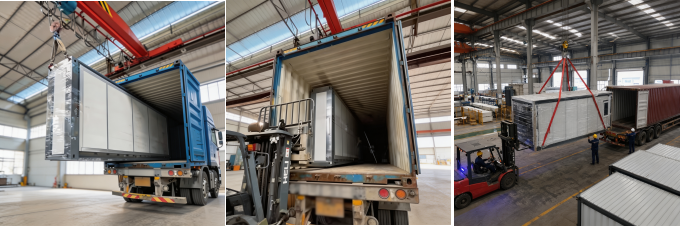
What does this mean? Take routes to the United States as an example: purchasing prefabricated houses with fixed widths is often classified as “oversized cargo,” with ocean freight rates 2–3 times higher than those for general cargo, and port handling poses significant challenges. In contrast, double-wing units are booked as standard containers, greatly reducing the logistics cost per unit. For routes with multiple transshipments, such as those to Africa and the Middle East, standard container dimensions mean a lower cargo damage rate. We have “folded” the high cost of international logistics into our customers’ profit margins—this is the first trump card for Double Wing expandable units as they conquer the global market.
Express Delivery—“Plug-and-Play” Solutions for the Infrastructure Boom in the Middle East and Africa
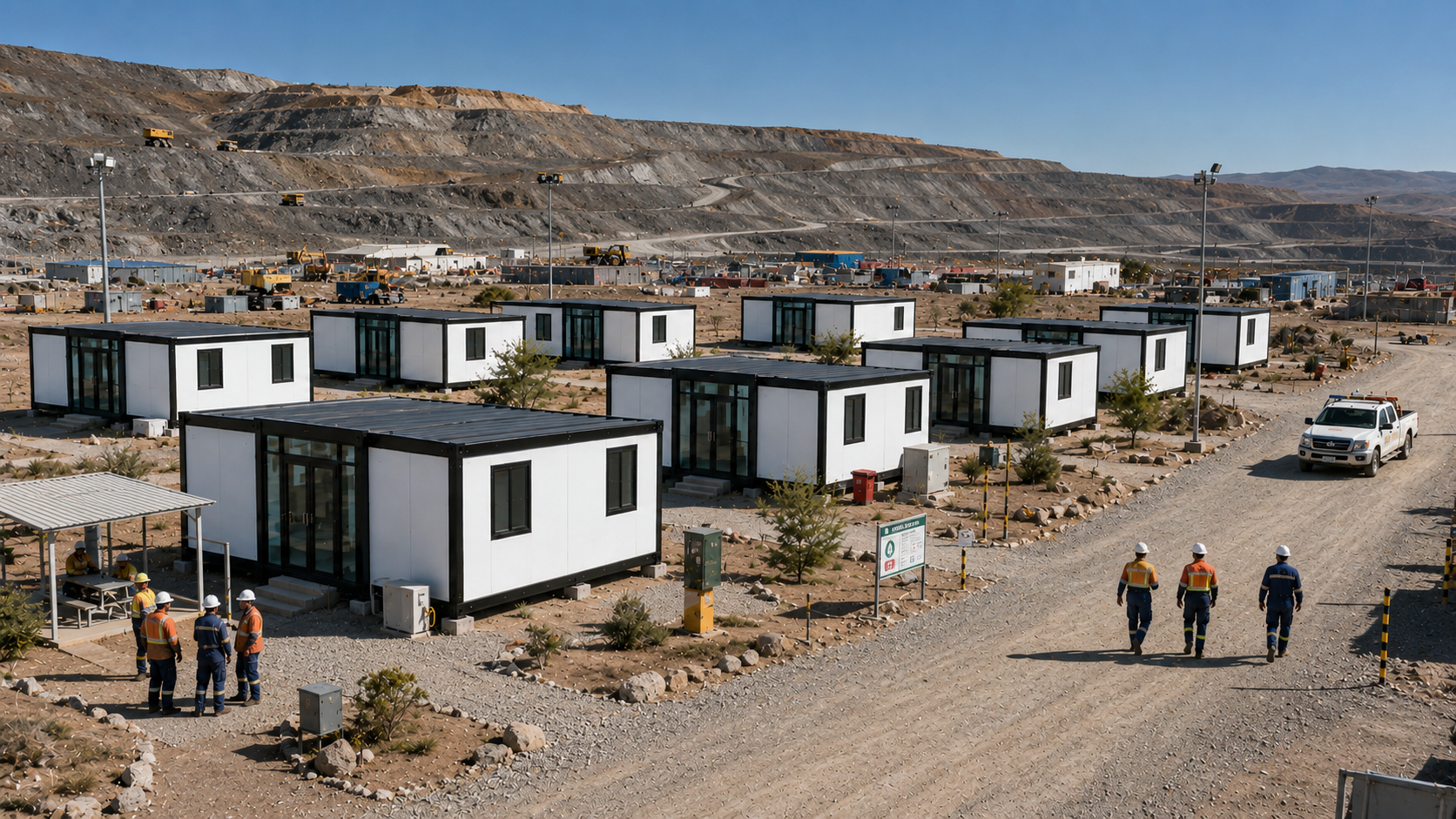
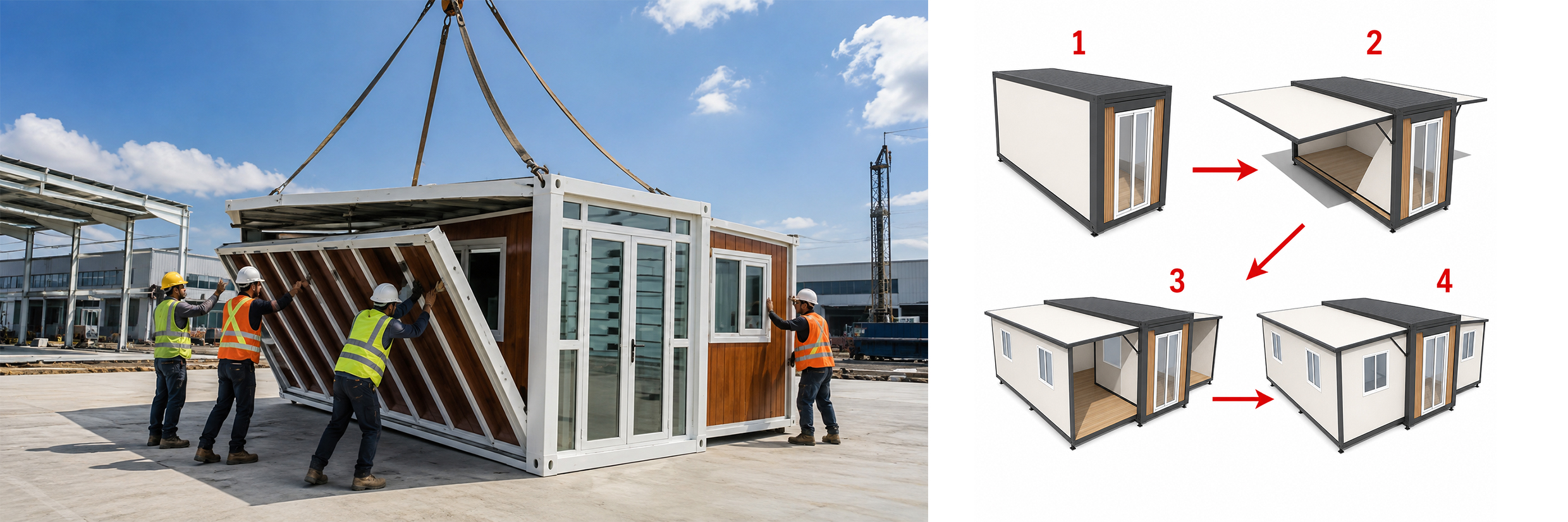
When constructing in the deserts of the Middle East or the remote interior of Africa, time is of the essence, and skilled labor is a luxury. Double Wing expandable units were created precisely to address these harsh environments and labor challenges. Traditional shipping containers require workers on-site to decipher complex installation drawings, taking days to assemble; in contrast, our Double Wing Containers are 90% pre-fitted before leaving the factory—with electrical and plumbing lines, drywall ceilings, and bathroom fixtures all pre-installed. Upon arrival at the site, using a standard local crane, they can be set up and ready for use in just 2–4 hours; simply connect them to the pre-laid main water lines and cables, and they’re ready for occupancy. This “plug-and-play” feature enables oilfield camps and mining project sites to quickly become operational, mitigating risks such as construction halts during the local rainy season and shortages of skilled workers. For general contractors, this not only shortens the construction schedule but also reduces on-site management costs and potential security risks, serving as。